
What Every New Mum Should Know
Caring for your C-section scar after childbirth is one of the most important parts of your postnatal recovery. Whether you’re just home from the hospital or a few weeks into healing, knowing what to do (and what to avoid) can make a big difference in how well and how comfortably your body recovers. In this guide, you’ll learn the key steps every new mum should take to keep their scar clean, protected, and supported, and how our postnatal scar therapy in Paignton can help with long-term recovery and comfort.
Why C-Section Scar Care Matters
A C-section is major surgery. Beyond the emotional and physical demands of new motherhood, your body is healing through multiple layers of tissue. Without the right care, scarring can become painful, tight, or limit your movement. That’s why starting gentle care early, then transitioning into professional support like C-section scar treatment, can help you feel more like yourself again.
Professional Scar Therapy Options in Paignton
At Physiotherapy Torbay, we use advanced techniques including Lymphatouch and Winback 3TX to:
- Break down tough scar tissue and adhesions.
- Reduce the anchoring of the scar and improve movement
- Reduce sensitivity, pain and /or numbness and improve blood flow.
- Support long-term pelvic and abdominal health.
Signs Your Scar Needs Medical Attention
Always speak to your GP or midwife if you notice:
- Increasing redness or swelling.
- Pus or unusual discharge from the scar.
- Fever over 38°C (100.4°F).
- Sharp or worsening pain around the incision.
- Any re-opening of the wound
Post Surgery Scar Advice
Different Types of Scarring
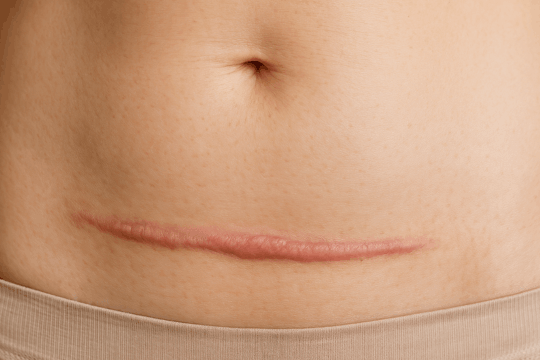
A scar takes around 2 years to fully reach maturity, which means it is constantly changing within that time. During this remodelling phase, your scar may adapt to one of these scars listed below. With the correct scar care and support, you and your scar can recover well.
Atrophic - Flat Line Scar:
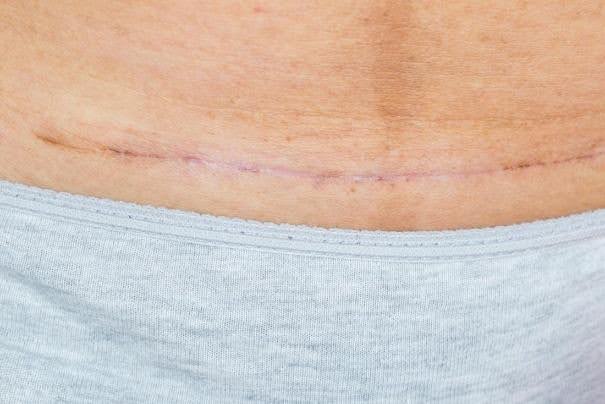
This is where the body has healed well; the scar is flat and not raised or red. However, underneath the scar, it may still pull and feel tight. If your scar heals like this, then please see the ‘helpful hints and scar massage tips’ on how to help with these symptoms.
Hypertrophic:
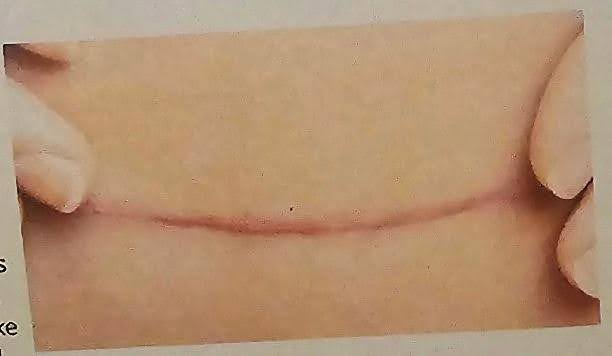
This is where the body lays down excess collagen on top of collagen within the original scar incision. It forms this red, rope-like structure over the top of the original incision line. 50% of all scars turn hypertrophic. There are many things that you can do to help with the pulling, redness and tightness that a scar like this can cause on the surface and under the surface of the skin.
Keloid Scarring:
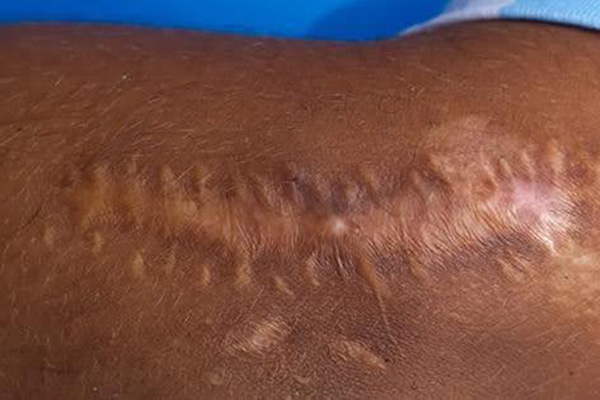
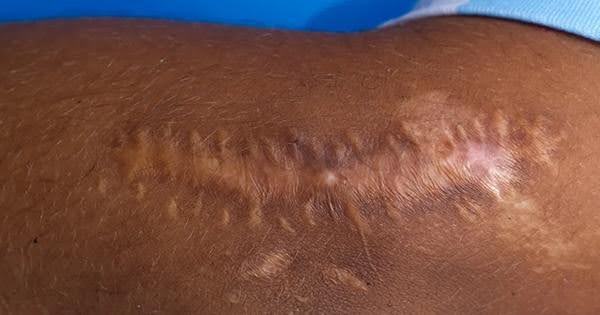
Keloid scarring is where the body has laid down excess collagen on top of collagen, within the original incision and outside the original incision. This type of scarring is more common with darker skin tones, if you are predisposed to this kind of scarring and if you have a family history of keloid scarring.
Advice to Help You Heal Well Straight After Your Surgery:
1. Hydration.
Keeping yourself and your tissues well hydrated will help the healing of your scar. When you are dehydrated, your scar can feel ‘stuck’ and ‘tight’ under the surface. Sometimes your scar can become itchy, which can mean that it is healing, but also dehydrated.
2. Rest.
We know this is easier said than done, but it is important to give you and your scar the best chance of healing well. Ask for help from family members, neighbours or your local community to support you while you recover.
3. Nutrition.
Eating well is going to help you and your scar recover well. Plenty of proteins (oily fish, meat, pulses and lentils) may help scar recovery. Enjoying a healthy intake of fresh fruit and vegetables on a daily basis is essential. A diet which contains oats and grains for zinc may also help.
4. Scar care.
Unless otherwise informed, please use clean, clear water over your scar once the dressing has been removed. Do not use any harsh chemicals on your scar (wax, exfoliants, scrubs or highly perfumed shower gels) whilst your scar is healing. Pat dry your scar after your shower or wash it with a clean soft towel or cloth.
5. Breathe.
If your scar is under layers of excess skin, please take the time to lift the skin to allow areas around the scar to ‘breathe’ and reduce the possibility of the scar becoming sore.
6. Massage.
Once your scar has fully healed over, there are no stitches in place, or staples present and no infection – you can start scar massage on your scar. This normally occurs around 4-6 weeks after your surgery.
What to Look Out For as Your Scar Heals
these are:
- Infection
- Wound opening
- Increasing pain levels
Signs of Infection Could Include:
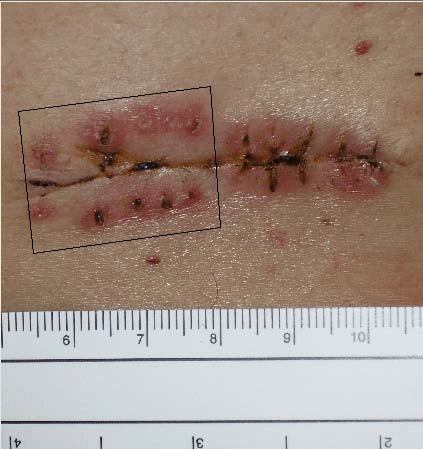
- Wound is red
- Green or Yellow weeping or discharge
- Feeling feverish or having a high temperature
Wound opening: If you notice one part of your scar has opened up or there is blood or discharge coming out of your wound, please speak to your doctor, nurse or GP in the first instance.
Increasing pain levels: After any surgery, you may experience pain. This should be controlled with pain medication, rest and support while you recover. If you are finding that the pain around your scar site is not improving or getting worse, please speak to your doctor, nurse or GP in the first instance.
As your scar recovers, you can start to engage with your scar. Always take your time; there is no rush, and your body is doing its best to heal.
Engagement With Your Scar From 2-4 Weeks
After an operation, the first 6 weeks are an important stage in scar recovery and healing. Here are some things that you can do to help with scar recovery within the first couple of weeks.
1. Once any dressing has been removed, keep your scar clean. You can do this by showering daily and allowing cool, clear water to wash over your scar. DO NOT USE any perfumed shower gels or cleansers on your scar.
2. Pat dry your scar – use a clean, soft face cloth or soft towel to pat dry your scar.
3. Allow air to get to the scar (if it is in an area which is occluded by clothes or an overhang of skin).
4. Keep the area around the scar moisturised by using a good cream or oil to hydrate the skin.
5. If your scar is on or around your abdominal wall, you may find slow, deep breathing helpful. Do this a couple of times per day.
6. Look at your scar. You can do this by looking in the mirror or directly at your scar. The sooner you can do this the better. This is the first step in engaging with your scar.
7. Once there are no stitches or staples left in your scar, no infection and your scar is closed over, you can lightly sweep a good scar cream or oil over your scar. Light touch only and use your pads of your fingers to touch the scar. This is the first step in engagement with touch to your scar. Do this approximately 5 minutes per day.
Engagement With Your Scar From 4-6 Weeks & Beyond
1. As your scar is healing and you are feeling more confident with moving around and looking after your scar, you may consider scar massage.
2. This can only be done once the scar has fully healed over, there are no stitches or staples present and infection or openings in the scar.
3. You may want to wait to do scar massage until your doctor or consultant has checked the healing of your scar.
4. Once you are able to start scar massage, please start lightly.
5. You may want to use a good scar oil or cream on your finger tips while you are doing scar massage.
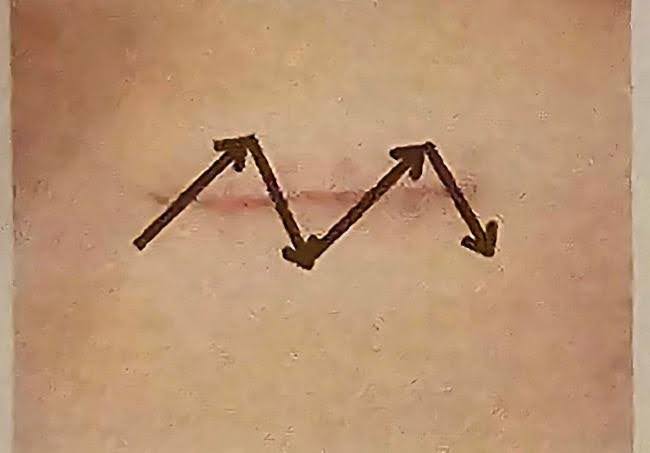
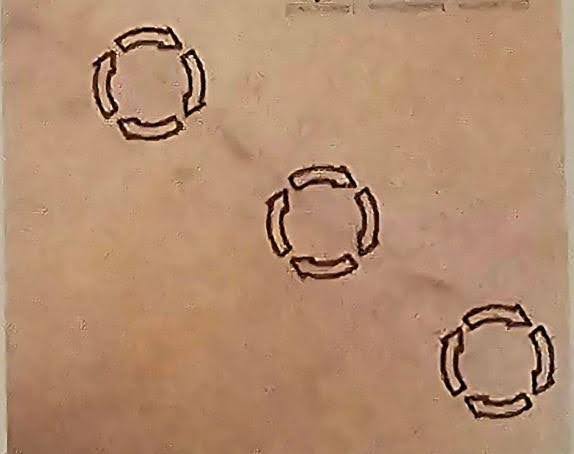
6. Make sure that you are comfortable and rested – give yourself time. Start by lightly touching your scar – above, over the scar and below the scar, using the pads of your fingers using sweeping motions across your skin and scar – you can do this with one hand or two hands (see the picture).
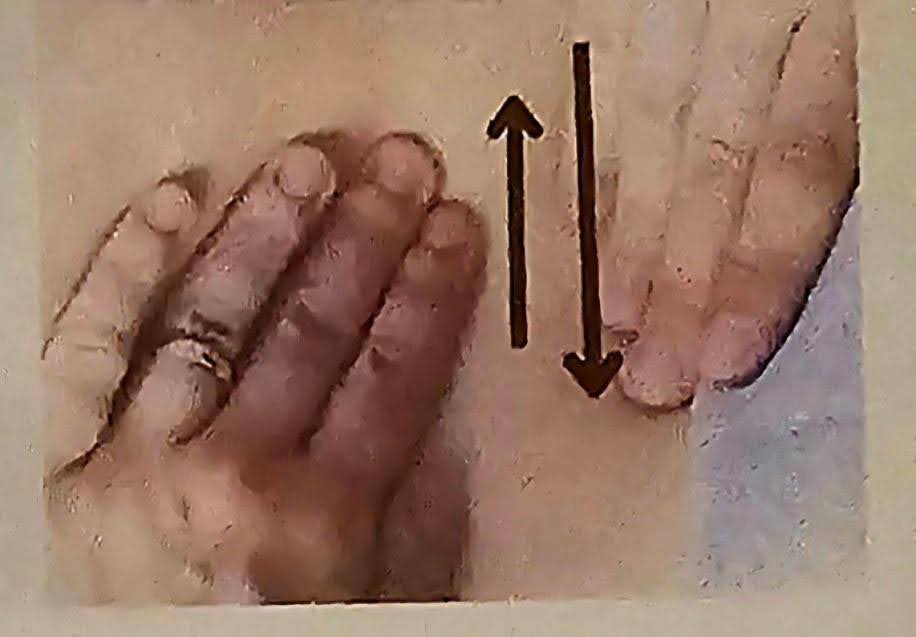
- Sweep up and down the scar in a zig zag motion and then do a circular motion over the scar (see pictures below). Always have direct contact over the scar, using the pads of your fingers and be light and gentle over your scar. Do this for approx. 5-10 minutes per day.
- If you feel any pain or discomfort whilst doing the scar massage, please stop. You may want to start again when you feel ready.
9. You can continue to do daily scar massage while the scar heals – up to 2 years. However, you can continue with scar massage beyond this time if necessary.
Any problems with your scar please seek medical advice from your GP, consultant or nurse.
Recommended Products for Healing
- Scarban C-section strips: Silicone sheets for softening and flattening hypertrophic and keloid scars.
- Alhydran Moisturiser: Ideal for hydration once the skin is closed.
Available to purchase directly from Physiotherapy Torbay.
How to use your Silicone Scarban Kit
1. Build up the time wearing your silicone strip -first day 2 hours, second day 3 hours, third day 4 hours and so on. You can wear your silicone strip up to 23 hours per day.
2. After wearing your silicone, gently remove it and wash under warm water, with a pea-sized amount of silicon soap and some gentle rubbing for a couple of minutes to clean it. Paying particular attention to the edges of the sheet.
3. The strip will curl up when it is washed and will lose nearly all of its stickiness; don’t worry it will flatten as it dries, and the stickiness will return.
4. Leave it to dry – sticky side up – on the side of your bath or sink. It will take over an hour for the silicone to fully dry.
5. While your silicone strip is drying, please do your scar massage (as instructed in your appointment).
6. Make sure that any oils or creams that you have used to do scar massage are fully dried and absorbed into your skin before applying the silicone strip. If there are any products left on the skin, please wipe them off before replacing the silicone strip.
7. When the scar is dry, and there is no moisture around the scar, and the silicone is fully dry, please put the silicone back over the scar. You can wear your silicone to sleep overnight.
- Repeat the process the next day.
- Please make sure that you are careful with cleaning your silicone strip and gently peeling it off your scar. Oils and creams on your skin will damage the silicone and shorten its life.
- Please make sure that the scar is clean and dry before applying the silicone strip.
- Do not wear the silicone strip in the bath or in the shower.
- Do not swim in the silicone strip.
- Take photos of your scar before you start using the silicone, then after a week, 2 weeks and 3 weeks and so on.
If you need any further information, please email me at sarah@physiotherapytorbay.co.uk
Will massage make the scar disappear?
Massage can improve the look, feel, and flexibility of your scar, but it may not erase it completely.
What if my scar still feels tight months later?
This is common. A course of scar physiotherapy can help release tension and restore function.
Book an Appointment at Our Clinic
C-section scar care doesn’t have to be overwhelming. With professional support and small daily steps, you can restore your body’s comfort and confidence.
Contact Physiotherapy Torbay today to book your postnatal scar therapy or Strong Mummy Postnatal Assessment in Paignton.