
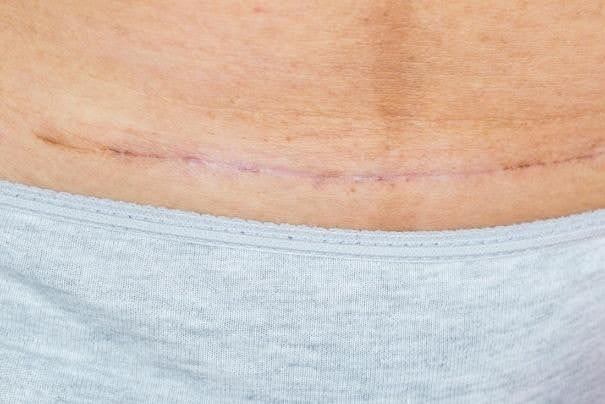
If you have lived with a scar for months or even years, you may assume there is nothing more you can do about it. However, old scar treatment is still worth exploring when a scar feels tight, sensitive, uncomfortable or restricted.
A mature scar cannot simply be erased, and treatment cannot guarantee that it will look or feel completely different. But the age of a scar alone does not mean it is too late to have it assessed. Depending on the scar and your symptoms, scar therapy may focus on improving tissue movement, comfort, sensitivity or how the surrounding area functions.
The Short Answer: Can Old Scars Still Be Treated?
Yes, older scars can still be assessed and may benefit from treatment.
Scars naturally change for a long time after an injury or operation. It takes 2 years for a scar to fully mature. Even once a scar is considered mature, it can still be treated and improved if it is painful, uncomfortable, pinned in, pulls, feels tight, under- or oversensitive, or even if the scar is just generally bothering you.
The important distinction is that treating old scars is not the same as removing them. Scar therapy is generally about improving particular problems associated with the scar rather than making the scar disappear completely.
For example, somebody may seek help because their scar:
- Feels tight or tethered
- Is uncomfortable when they move
- Feels unusually sensitive or numb
- Appears raised or firm
- Is difficult to touch
- Seems to affect movement in the surrounding area
- Continues to bother them long after the original surgery or injury
What can realistically change depends on the scar itself, its location, the tissues involved and your individual symptoms.
What Actually Happens As A Scar Gets Older?
A scar forms when the body repairs deep skin damage by producing thick collagen fibres. Scars age by slowly breaking down and reorganising that tissue over several months and years.
The healing process happens in 3 main overlapping stages:
- Inflammation: Blood vessels widen to send white blood cells to the wound, causing early redness, swelling and pain.
- Proliferation: Cells called fibroblasts arrive to build a bridge of new collagen, closing the wound within a few weeks into a firm, raised and red immature scar.
- Remodelling: The body replaces weak collagen with a stronger, more resilient network.
Maturation and ageing change a scar’s look and feel over time. Over 6 months to 2 years, the dense collagen reorganises, making the scar flatter and softer. Extra blood vessels fade away, turning a red or pink scar paler, silver, or slightly lighter or darker than your normal skin.
If the scar still feels uncomfortable, restricted or troublesome, the useful question is often not simply "How old is my scar?" but "What problem is this scar causing me?"
That gives treatment a clearer goal.
Why A Mature Scar Might Still Cause Problems
Some scars become barely noticeable over time. Others continue to cause symptoms.
Scars can be itchy, painful, numb or uncomfortable, while certain scar types can make movement difficult, restricted and tight.
A scar may also feel different from the surrounding skin because the tissue formed during healing is not identical to the tissue that was there before. This could have more or less sensation than the surrounding area.
Tightness Around The Scar
Some people describe a mature scar as pulling, dragging or feeling "stuck".
Scar tissue can be less mobile relative to surrounding tissues. This is because scar tissue can adhere to structures around it and restrict movement.
This may be particularly noticeable when the scar crosses an area that needs to stretch or move frequently.
Changes In Sensation
Scars can remain numb, sensitive, itchy or uncomfortable long after the wound itself has healed.
This is because the injury or surgery damages tiny nerve endings and alters the skin’s structure during the healing process. Altered sensation is a recognised feature of some scars and may be one reason someone seeks professional advice.
Restrictions During Movement
A scar does not need to be painful to be bothersome.
You might notice pulling only when reaching, twisting and exercising. Depending on the scar’s location and depth, reduced movement between the scar and surrounding tissues may contribute to that feeling.
Scar therapy is therefore concerned with function as well as appearance.
Ongoing Cosmetic Concerns
Some people are primarily concerned about how a scar looks.
Scar therapy forms part of scar management, but expectations are important. Scars cannot be completely removed, although treatment may help flatten, lighten, reduce restrictions, increase mobility and reduce any skin overhang.
Keloid, hypertrophic and hypotrophic scars may require different forms of management. This can be assessed fully in clinic and treated appropriately.
Does Scar Massage Work On Scars?
Daily scar massage at home is commonly recommended as part of scar care once the wound is fully healed and there is no scab remaining.
Once fully healed, the scar can be massaged using a specific scar oil, such as Naqi, or a medical-grade oil-in-water emulsion cream, such as ALHYDRAN. Massage can help soften the scar tissue, encourage collagen fibres to realign and maintain mobility by reducing the risk of the scar sticking to the underlying tissues. For mature scars, massage may still help improve tissue flexibility, reduce stiffness, tightness and discomfort, and support the return of sensation or reduce hypersensitivity.
Can You Improve A Scar That Is Years Old?
Yes, although improvement should be defined realistically. Your goal may take longer to achieve once the scar is fully mature, as there is less tissue flexibility and reduced blood supply. Treating a more mature scar is about correction rather than prevention in a new scar.
If your aim is to make an old scar disappear, scar therapy cannot promise this.
If your goal is instead to investigate tightness, discomfort, hyper- or hyposensitivity, skin overhang, pinned-in or anchoring scarring, or reduced tissue mobility, a mature scar is still worth assessing, as positive changes can be made.
At Physiotherapy Torbay, we treat scars of all ages (from 6 weeks), including surgical, injury-related, C-section and oncology scars. Our approach includes manual scar therapy and specialist medical devices such as LymphaTouch (negative pressure therapy) and WINBACK BACK 3 TX (TECAR technology).
The treatment chosen depends on the scar, the location and symptoms rather than simply how many years ago it formed.
This is particularly important because two scars of the same age may behave very differently.
One person might have a 10-year-old scar that is soft and causes no problems. Another may have a scar of the same age that still feels restricted, painful, pinned or uncomfortable.
Which Types Of Mature Scars May Be Assessed?
Scar therapy is not limited to one particular type of surgery or injury.
At Physiotherapy Torbay, Sarah works with a range of scars including:
- All C-section scars
- All other surgical scars (including joint replacement surgeries and any other medical surgery)
- All injury-related scars
- All oncology-related scars
We assess and treat, and make positive differences to, scars of all different ages rather than restricting care only to recently healed wounds.
Treatment still needs to be appropriate to the individual scar. A full treatment plan will be individualised after a full initial assessment.
For example, a flat or hypotrophic surgical scar that feels restricted or pinned down is not managed in the same way as a raised keloid scar.
What Can Scar Therapy Realistically Aim To Improve?
A useful scar-therapy goal should relate to something you can actually notice or measure.
Depending on your assessment, the focus may be on:
- Improving movement of the scar and surrounding tissues
- Reducing a feeling of tightness or restriction
- Helping an area become more comfortable to touch
- Supporting movement around the affected area
- Teaching appropriate scar-care techniques for home
- Addressing wider functional concerns associated with the scar
- Reducing a ‘shelf’ or ‘overhang’ of skin
Is An Old C-Section Scar Different?
C-section scars are a common example of scars that people may only think about treating years later.
Someone may have recovered well after birth but later notice that the scar feels tight, numb, sensitive or uncomfortable with certain movements. Others may only start paying attention to the scar when returning to exercise or addressing another postnatal concern.
There is no requirement for a C-section to be recent before you discuss the scar with Physiotherapy Torbay. The clinic provides scar therapy for both recent and long-standing C-section scars.
You can read more about what assessment and treatment may involve on our C-Section Scar Therapy page.
For people experiencing wider postnatal or pelvic-health concerns alongside the scar, our Women’s Health Physiotherapy service or a Strong Mummy Postnatal Assessment may also be relevant.
When Should You Not Massage Or Treat A Scar Yourself?
Scar massage should only be carried out once a wound has healed fully, meaning no scab remains.
Speak to a GP or other medical professional if a scar becomes swollen or painful, feels warm to touch or produces pus, as these are signs of infection and may require antibiotics or other medical intervention before scar therapy can be considered.
You should also avoid assuming that every lump, pain or change around an old operation site is caused by scar tissue as this may need to be investigated further.
If something is new, worsening, unexplained or concerning, medical assessment should come before scar therapy.
Common Mistakes When Treating Mature Scars
Older scars can tempt people into taking a more aggressive approach because they assume the tissue needs to be "broken down". That can be misleading.
A few principles are worth keeping in mind.
Using Too Much Pressure
Scar work should not simply become more forceful because the scar is older.
Comfort, tissue response and the type of scar all matter.
Expecting Complete Scar Removal
No responsible scar treatment should promise to erase an old scar, as this is not possible; scars cannot be gotten rid of.
A more useful aim may be changing how the area feels or moves.
Focusing Only On Appearance
A scar can look relatively settled while still feeling tight, restricted, pinned or uncomfortable.
Conversely, a visible scar may cause no functional problems at all.
Treatment should therefore be driven by your own concerns and symptoms rather than appearance alone.
Assuming Age Rules Out Treatment
How long you have had the scar is somewhat relevant (over or under 2 years old), but it is not the only factor.
If a mature scar remains troublesome, it may still be appropriate to have it professionally assessed.
What Happens During Professional Scar Therapy?
A scar therapy appointment should begin by understanding why the scar is bothering you.
At Physiotherapy Torbay, treatment is personalised and will include examining the scar and surrounding tissues, discussing your symptoms and looking at how the area moves.
Depending on your needs, Sarah may use hands-on scar therapy and specialist medical devices including LymphaTouch (negative pressure therapy) and WINBACK BACK 3 TX (TECAR technology). The clinic provides scar therapy for all surgical, injury-related, oncology and C-section scars.
Advice for managing the scar between appointments will also form part of the treatment plan.
You can see scar therapy within our wider Physiotherapy Torbay services.
How Do You Know If Your Mature Scar Is Worth Assessing?
Consider how the scar affects you now.
An assessment is worth considering if:
- The scar feels tight or restricted
- Movement creates pulling around the scar
- The area remains unusually sensitive or numb
- The scar causes discomfort
- You are unsure how to massage or care for it
- You have started noticing the scar during exercise or everyday movement
- You have a C-section, surgical, injury-related or oncology scar that continues to concern you
If your scar is completely comfortable, mobile and not bothering you, there may be no reason to treat it simply because it is mature unless you are getting other related functional problems.
Frequently Asked Questions
Is Ten Years Too Late?
No. The age of a scar alone does not determine whether assessment will be useful. If a long-standing scar still feels tight, uncomfortable, sensitive or restricted, you can discuss whether scar therapy is appropriate; simply get in touch.
Can An Old Scar Disappear?
No treatment can guarantee that a mature scar will disappear completely, because it won’t. You cannot get rid of a scar; however, sometimes it can fade to a point where you hardly see it and it is symptom-free, but this outcome is not promised.
Can Scar Massage Help Years Later?
Scar massage is an established part of scar management, although evidence suggests that this is more effective in the first 2 years. For an older scar, massage can help to make positive improvements; however, results may take longer and may not be as effective.
Can You Treat Old C-Section Scars?
Yes, absolutely. Physiotherapy Torbay provides scar therapy for recent and long-standing C-section scars. Treatment is based on the individual scar and symptoms rather than simply the time since childbirth.
Does Scar Therapy Hurt?
Scar therapy should be adapted to the individual and their comfort. If a scar is very sensitive or painful, treatment may need to start gently. Any unexplained, different or worsening pain that there is no reason for should be medically assessed rather than assumed to be normal scar tissue.
How Many Sessions Will I Need?
There is no standard number that applies to every scar. The age, type and location of the scar, your symptoms and what you want to improve can all influence the treatment plan.
A Mature Scar Does Not Have To Be Ignored
A scar may have been part of your body for years without ever being properly assessed. If it is comfortable and causes no problems, that may be perfectly fine. But if it still feels tight, hypo- or hypersensitive, uncomfortable, pinned or restrictive, its age alone is not a reason to dismiss your concerns.
At Physiotherapy Torbay, Sarah provides scar therapy for C-section, surgical, injury-related and oncology scars from a private clinic in Paignton. Treatment is personalised, with realistic goals focused on how the scar and surrounding tissues feel and function.
If you would like to find out whether scar therapy may be appropriate for your long-standing scar, you can contact Physiotherapy Torbay to discuss your scar.
This article provides general information only and is not a diagnosis or a substitute for individual medical advice. Seek appropriate medical assessment for new, worsening or unexplained symptoms.