
Stress Urinary Incontinence In Paignton With Women’s Health Physiotherapy
If coughing, sneezing, lifting or exercise is causing bladder leakage, you do not have to simply put up with it. At Physiotherapy Torbay, we provide specialist women’s health physiotherapy for stress urinary incontinence in Paignton, with personalised support focused on understanding your symptoms, pelvic floor function and individual goals.

Personalised Support For Your Pelvic Health
- Qualified Physiotherapist: Sarah has more than 10 years of physiotherapy experience, with a specialist focus on women’s health.
- Women’s Health Expertise: Our women’s health services include support for urinary incontinence, pelvic floor dysfunction, prolapse, pain during intercourse, pelvic pain and postnatal concerns.
- Personalised Care: Your physiotherapy is based on your individual symptoms, circumstances and goals rather than a one-size-fits-all approach.
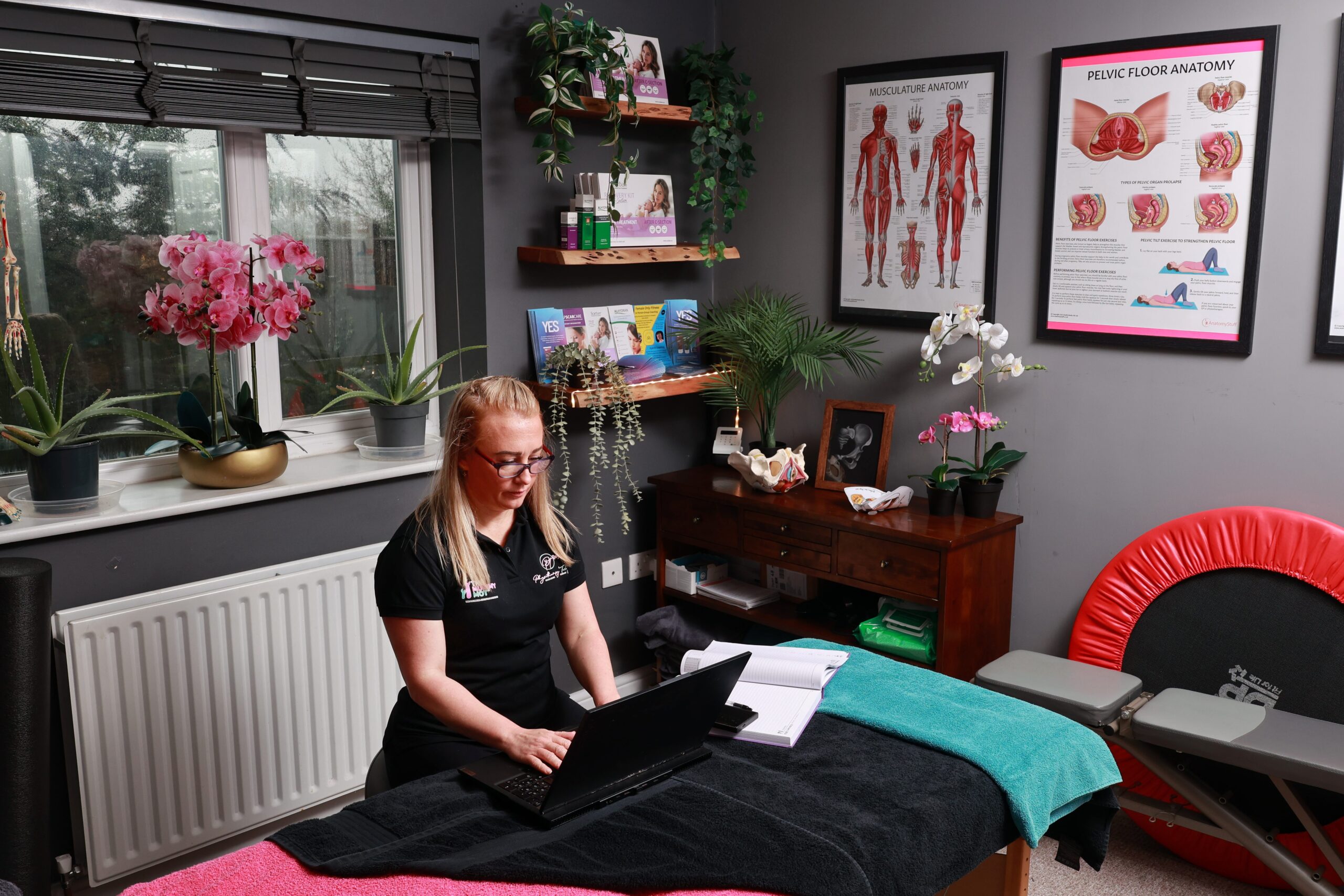
- Private Clinic Setting: Appointments take place in our calm, home-based clinic in Paignton.
- Postgraduate Women’s Health Experience: Sarah has worked in Women’s Health for over a decade, completing numerous postgraduate courses in current assessment and treatment techniques. She provides specialist pelvic floor, postnatal, perimenopause and menopause support.
- Confidential Support: We understand that bladder leakage can feel difficult to discuss, so women’s health appointments are handled professionally and sensitively.
- Local Experience: Physiotherapy Torbay has supported people across Paignton and the wider Torbay area since 2021.
- Trusted By Local Clients: The clinic has more than 50 five-star Google reviews.
What Is Stress Urinary Incontinence?
Stress urinary incontinence is the unintentional leakage of urine when pressure inside the abdomen and bladder suddenly increases.
It may happen during activities such as coughing, sneezing, laughing, lifting or exercising. The word “stress” refers to physical pressure on the bladder rather than bladder muscle overactivity, emotional or psychological stress.
Stress incontinence can occur when the pelvic floor muscles, urethral sphincter or other structures involved in maintaining continence are not providing enough support to keep the urethra closed when pressure increases.
Some women experience occasional small leaks, while others find that symptoms affect exercise, work, social activities or everyday confidence. An appropriate assessment can help establish what may be contributing to your symptoms and which management options are suitable.
For further general information, visit the NHS Urinary Incontinence Guide.
Common Signs & Symptoms
Stress urinary incontinence commonly involves urine leakage during activities that place additional pressure on the bladder. These may include:
- Coughing Or Sneezing: Leakage may occur when pressure rises suddenly.
- Laughing: Some people notice small amounts of urine escaping when laughing.
- Exercise: Running, jumping and some higher-impact activities may trigger leakage.
- Lifting: Picking up children, shopping or heavier objects can sometimes provoke symptoms.
- Physical Exertion: Leakage may occur during movements that increase abdominal pressure.
These symptoms can also occur alongside urgency or other bladder problems. When both stress and urgency symptoms are present, this may be described as mixed urinary incontinence.

Possible Causes & Triggers
Stress urinary incontinence can have more than one contributing factor.
According to NHS guidance, factors associated with stress incontinence can include weakness or damage affecting the pelvic floor muscles or urethral sphincter. Pregnancy and vaginal childbirth can contribute, as can increased abdominal pressure and some forms of pelvic surgery.
Other factors associated with urinary incontinence more broadly may include increasing age (reduction in oestrogen) and obesity, although urinary leakage should not simply be assumed to be an inevitable part of ageing.
Because individual circumstances vary, experiencing leakage does not tell you by itself what is causing the problem.
How We Help With Stress Urinary Incontinence
Our role is to assess your individual presentation and help you understand how your pelvic floor relates to bladder control. Where appropriate, physiotherapy may include pelvic floor education, targeted rehabilitation and a personalised exercise programme.
Pelvic floor muscle training is an established conservative treatment for stress urinary incontinence. NICE recommends a supervised pelvic floor muscle training programme lasting at least three months as first-line treatment for women with stress or mixed urinary incontinence.
This does not mean that everybody needs exactly the same exercises. Appropriate pelvic floor rehabilitation should take account of your individual function and ability rather than simply telling you to perform generic exercises.
Our aim is to help you understand your symptoms, develop an appropriate management strategy and work towards improvements that matter to you. We cannot guarantee a particular outcome, and further medical assessment may sometimes be required by a specialist gynaecologist/urogynaecologist.
When To Seek Advice
It is sensible to speak to a healthcare professional if you experience urinary leakage, particularly when it is persistent, worsening or interfering with your daily life.
You may consider seeing a women’s health physiotherapist where pelvic floor dysfunction or stress incontinence is affecting daily activities such as exercise, lifting, coughing, sneezing or your confidence in everyday situations.
The NHS advises seeing a GP if you have any type of urinary incontinence. A GP can consider your symptoms, investigate possible underlying causes where necessary and refer you for additional care if appropriate.
Please seek a healthcare professional’s advice prior to using any pelvic floor chair that you may see in a local salon. It is important that you are assessed by a qualified healthcare professional and advised appropriately beforehand.
Physiotherapy Methods We May Use
The precise approach depends on your assessment and individual needs.
Pelvic Floor Assessment
Understanding how your pelvic floor is functioning helps guide an appropriate rehabilitation plan.
Rather than assuming every case of leakage is simply caused by "weak" muscles, physiotherapy considers your symptoms and pelvic floor function before deciding which exercises or strategies may be useful.
Assessment also provides an opportunity to discuss when leakage occurs, how it affects you and what you would like to return to or feel more confident doing.
Pelvic Health Education
Understanding the pelvic floor and how it responds during activities such as coughing, lifting and exercise can form an important part of managing stress incontinence.
Education can help you understand why certain movements may trigger symptoms and how rehabilitation relates to everyday function.
The Chartered Society of Physiotherapy explains that pelvic floor muscles contribute to bladder and bowel control and can be retrained through appropriate exercise.
Pelvic Floor Training
Pelvic floor muscle training involves learning to contract and relax the muscles involved in supporting the bladder, bowel and pelvic organs.
When appropriate, exercises can then be progressed according to your ability and goals.
NICE identifies supervised pelvic floor muscle training of at least three months as first-line treatment for women with stress or mixed urinary incontinence.
The NHS also notes that pelvic floor exercises may take several months before benefits become noticeable, making consistency and correct technique important.
Personalised Rehabilitation
Your programme can be adapted to your symptoms, current ability and everyday goals.
For one person, this may mean becoming more confident around coughing or lifting without leakage. For another, the goal may involve returning to exercise including weightlifting and/or running or managing postnatal pelvic floor symptoms.
Progress is individual, and improvement may require regular practice over time.
Learn more about our approach on our dedicated service page: Women’s Health Physiotherapy,


Who This May Be Suitable For
Our women’s health physiotherapy service may be appropriate if you are experiencing bladder leakage associated with increases in physical pressure.
This could include women who:
- Leak When Coughing Or Sneezing: Even occasional leakage can be worth discussing if it concerns you.
- Leak During Exercise: Running, jumping or other physical activity may reveal symptoms that are less noticeable during everyday movement.
- Experience Postnatal Leakage: Pregnancy and childbirth can affect pelvic floor function, and leakage may become apparent after having a baby.
- Leak When Lifting: Symptoms may occur when lifting children, shopping, work equipment or lifting weights in the gym.
- Have Ongoing Pelvic Floor Concerns: Urinary leakage may occur alongside prolapse, pelvic pain, sexual intercourse, or other pelvic health symptoms.
- Want Individual Guidance: Professional assessment can be useful if you are unsure whether you are performing pelvic floor exercises correctly or generic exercises have not addressed your concerns.
You do not need to wait until symptoms become severe before seeking advice.
Who This May Not Be Suitable For & Key Considerations
Women’s health physiotherapy is only one part of the wider management of urinary incontinence.
You may require other medical investigations; symptoms could require an assessment by a GP and follow-on referral to a specialist.
Important considerations include:
- Different Types Of Incontinence: Urgency, overflow, mixed and other forms of urinary incontinence can have different underlying mechanisms and management options.
- Underlying Health Conditions: Some cases of incontinence can be associated with neurological conditions, surgery, medication or other health problems.
- Persistent Or Changing Symptoms: New, unexplained or worsening bladder symptoms should be discussed with an appropriate healthcare professional.
- Conservative Treatment Has Limits: Pelvic floor rehabilitation can be an important first-line option, but some people may require medication, specialist investigations or surgical discussion depending on their circumstances and response to conservative care.
- Results Vary: The response to physiotherapy varies between individuals depending on the underlying problem, so complete resolution of symptoms cannot be guaranteed.
If we believe your symptoms require medical investigation or care outside the scope of our service, appropriate onward advice and referral may be recommended.



Why Choose Physiotherapy Torbay
Talking about bladder leakage can feel personal. Our aim is to make accessing appropriate support straightforward, private and professional.
Sarah is a qualified physiotherapist with more than 10 years of physiotherapy experience and a specialist focus on women’s health. Physiotherapy Torbay supports women with pelvic floor dysfunction, including urinary incontinence, alongside concerns such as prolapse, pelvic pain, postnatal recovery, pregnancy-related problems and perimenopause / menopause.
Appointments are available from our private home-based clinic in Paignton, where care is tailored to the individual rather than delivered as a generic exercise programme.
The clinic has more than 50 five-star Google reviews and has been established in Paignton since 2021.
Areas We Cover
Our clinic is based at 55A Preston Down Road, Paignton, Devon, TQ3 2RL.
We welcome clients from Paignton, Torbay and surrounding areas including:
- Preston
- Goodrington
- Marldon
- Torquay
- Brixham
- Totnes
- Broadsands
- Churston Ferrers
- And further afield
Free on-street parking is available on Lower Penns Road near the clinic.
Frequently Asked Questions
Is Stress Incontinence Normal?
Stress urinary incontinence is common, but it is not normal. Urinary leakage does not need to be dismissed simply as an inevitable consequence of childbirth or getting older. The NHS recommends speaking to a GP or specialist physiotherapist about any type of urinary incontinence.
What Triggers Stress Incontinence?
Typical triggers include coughing, sneezing, laughing, lifting and exercise. These activities temporarily increase pressure on the bladder and may lead to leakage where the continence mechanism cannot adequately counter that pressure.
Can Physiotherapy Help Incontinence?
Pelvic floor muscle training is a recognised conservative treatment for stress urinary incontinence. NICE recommends at least three months of supervised pelvic floor muscle training as first-line treatment for women with stress or mixed urinary incontinence.
At Physiotherapy Torbay, we provide individual women’s health physiotherapy to align with your symptoms and goals.
Are Pelvic Floor Exercises Enough?
They can be an important part of treatment, but the appropriate approach varies between individuals.
Professional assessment can help establish how well you are using the pelvic floor and guide an appropriate exercise programme. NICE highlights the value of supervised rather than unsupported pelvic floor muscle training.
How Long Does Treatment Take?
There is no single timeframe that applies to everybody. NICE recommends pelvic floor muscle training for at least three months as first-line treatment for stress urinary incontinence, and the NHS notes that it can take several months before benefits from exercises are noticed.
Your individual programme and review schedule will depend on your assessment and progress.
Can Childbirth Cause Incontinence?
Pregnancy and childbirth are recognised factors associated with stress urinary incontinence. Vaginal childbirth can affect the muscles and tissues involved in supporting continence, while pregnancy itself increases pressure within the abdomen regardless of the method of delivery.
Postnatal pelvic floor concerns are one of the areas supported through our women’s health physiotherapy service.
Can Exercise Cause Bladder Leakage?
Exercise does not necessarily cause stress incontinence, but activities that increase pressure within the abdomen can trigger leakage in someone who already has difficulty maintaining continence under load.
Should I See My GP?
Yes, particularly if your urinary symptoms are new, unexplained, changing or concerning. NHS guidance recommends seeing a GP if you experience any type of urinary incontinence.
Physiotherapy forms part of conservative management for stress urinary incontinence. However, if you do need to have surgery for whatever reason, physiotherapy can be helpful before (prehab) and after (rehab) surgery.
Do I Need A Referral?
Physiotherapy Torbay accepts direct bookings, so you do not need a referral from your GP to contact us about women’s health physiotherapy.
However, we may recommend seeking additional medical advice where your symptoms suggest that further investigation is appropriate.
For additional clinic-specific information, visit our FAQs page.
Take The Next Step With Confidential Local Support
If bladder leakage is affecting exercise, everyday movement or your confidence, we can help you explore whether women’s health physiotherapy is appropriate for you.
At Physiotherapy Torbay, we provide personalised support for stress urinary incontinence in Paignton from a qualified physiotherapist with specialist women’s health experience, in a private and welcoming clinic setting.
Call: 07700 100312 / 07772 145167
Email: sarah@physiotherapytorbay.co.uk
This page provides general information and is not intended to diagnose urinary symptoms or replace personalised medical advice. If you are concerned about bladder symptoms, particularly if they are new, unexplained or worsening, contact us, your GP or another appropriate healthcare professional.